

If you have PCOS, you already know the story. You eat less. You try harder. You watch others lose weight doing half the effort. And somehow, your body refuses to take part with you.
At some point, it stops feeling like a diet problem and starts feeling personal, like something is wrong with you.
It isn’t.
Your body isn’t broken. It’s running on a different hormonal system.
PCOS Changes How Your Body Handles Food
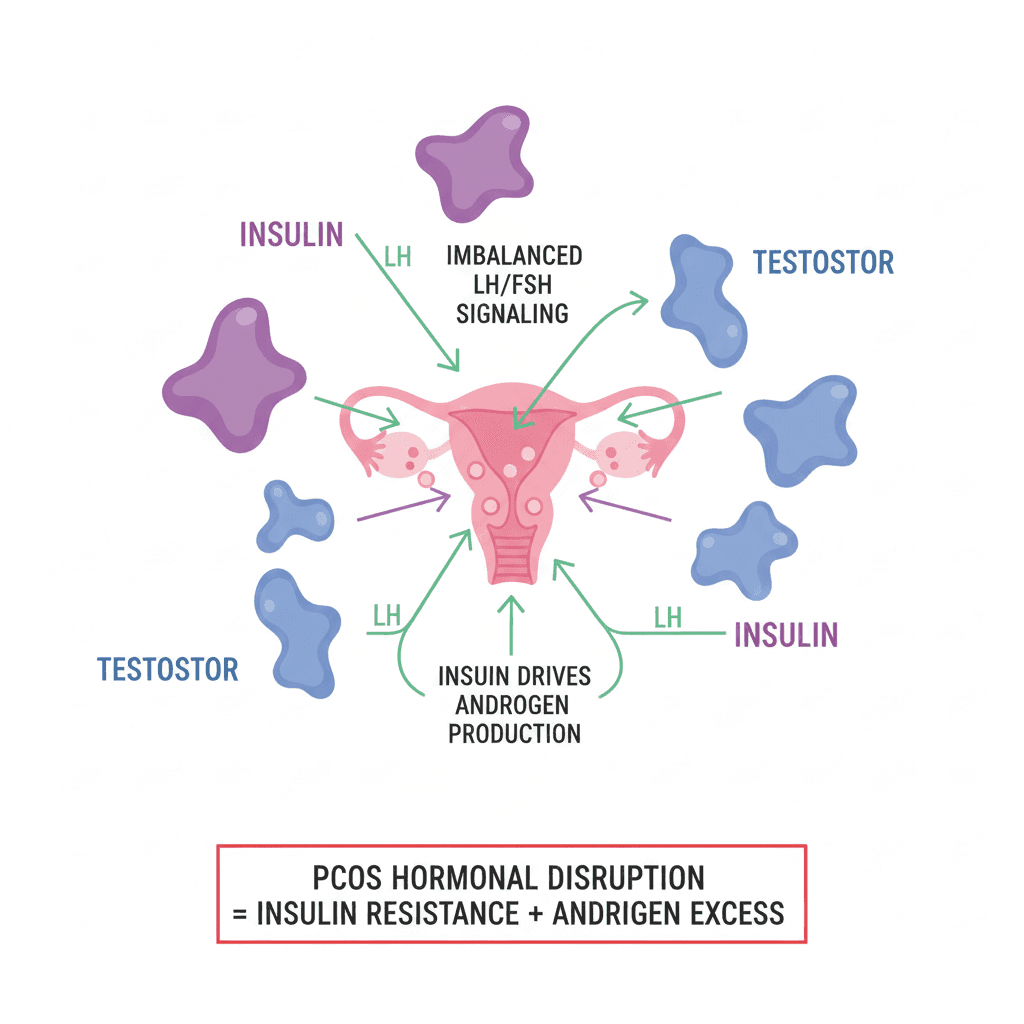
PCOS is not just about periods or ovaries. It is a metabolic condition that changes how your body uses energy. Most women with PCOS have some insulin resistance, even if their blood glucose level looks normal on routine tests.
Insulin is the hormone that decides whether the food you eat gets used for energy or stored as fat. When insulin levels remain high, the body gets stuck in storage mode.
That’s why two people can eat the same meal and get different results in comparison.
One burns it.
The other stores have it.

Why You Can Be in a Deficit and Still Not Lose Fat
Here’s the part nobody explains properly.
In PCOS, insulin stays raised for a longer time after you have a meal. That high insulin tells fat cells to stay inactive. So even when you eat lower-calorie food, your body can’t easily access the fat you already have. In PCOS fat loss, the body reacts as below:
Instead of burning fat, your body:
- Slows metabolism
- Increases hunger
- Breaks down muscle for energy
So you end up tired, hungry, and stuck even though you are technically “eating less.”
This is why dieting with PCOS often feels like a burden. PCOS fat loss is a little difficult. But it can be treated. PCOS weight loss is treated by some strategies recommended by the physicians. It is necessary to have an appointment with the gynecologist to treat PCOS in serious conditions.
Why You Feel So Hungry All the Time
This isn’t weak willpower. It’s chemistry.
High insulin and unstable blood sugar trigger:
- Cravings
- Low energy
- Mood swings
- Strong hunger signals
Your brain thinks that you are running out of fuel, even when your body is full of stored fat. So it commands you to eat more.
This is why PCOS hunger feels so intense and so unfair.

Why Cardio Makes It Worse for Many Women
Endless cardio elevates cortisol level, the stress hormone. Cortisol is responsible for making insulin resistance worse. That means more fat storage, not less.
You sweat. You burn calories. You feel exhausted. for PCOS weight loss It is necessary to control cortisol accordingly and reverse the insulin resistance.
And still, the scale does not respond as you want.
It’s not because you did not work hard enough. It’s because your hormones did not agree with what you were doing.

What Actually Helps a PCOS Body Lose Fat
PCOS weight loss is not about punishment. It’s about sending the right hormonal signals.
That means:
- Eating enough protein to keep insulin stable
- Building muscle so glucose has somewhere to go
- Avoiding extreme calorie cuts that raise stress hormones
- Letting the body feel safe enough to release fat
When insulin comes down, fat finally becomes accessible. That’s when weight starts moving.
Not because you starved harder but because your body stopped fighting you. In PCOS hormones are altered, and the male hormone becomes dominant.